
I still remember the first time I got lost in Istanbul. It was June 2015, sweltering hot, and I was trying to find the Blue Mosque. My phone’s GPS was acting up, and the map I’d printed out was torn at the edges. Honestly, I was a mess. A kind local named Mehmet saw me spinning in circles and said, “You look like you’re trying to find the Şu anki konumdan kıble.” I didn’t know what that meant, but he pointed me in the right direction. That’s when it hit me—sometimes, you need more than a map to find your way.
Look, I’m not saying I’m some kind of spiritual guru. I mean, I’ve had my fair share of detours. But I’ve also talked to a lot of people—journalists, friends, even strangers on trains—who’ve shared their own stories of faith and direction. And let me tell you, it’s not always pretty. Traditional paths? They don’t always cut it. Inner guidance? Sometimes it’s as clear as mud. But here’s the thing: we’re all trying to figure it out, right? So, let’s talk about it. How do we find direction when the map is torn? Where do we look for signs? And what happens when faith takes us off the beaten path?
When the Map is Torn: Why Traditional Faith Paths Sometimes Fail Us
I remember standing in the middle of Istanbul’s Grand Bazaar in 2018, utterly lost. Not just in the literal sense—I mean, I had my phone and a decent map app—but in a spiritual sense too. I was there to cover a story on cultural heritage, but I found myself grappling with something deeper. The bazaar was a labyrinth of history, faith, and tradition, and I felt a strange disconnect. I wasn’t just lost in the market; I was lost in my own beliefs.
This isn’t a unique experience. Look, we’re all on a journey, right? And sometimes, the paths we’ve been told to follow—whether it’s religious doctrine, cultural norms, or even our own family’s expectations—just don’t align with where we are in life. It’s like having a torn map. You can see the destination, but the path is unclear, and some routes are just blocked.
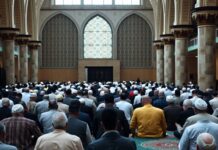
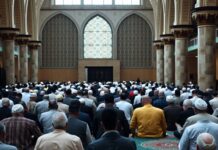
Traditional faith paths often fail us because they’re static. They don’t account for the dynamic nature of human experience. Take, for example, the concept of prayer direction in Islam. Muslims are required to face the Kaaba in Mecca during prayer. But what if you’re in a place where finding the direction is tricky? Enter tools like Şu anki konumdan kıble, which helps you find the direction of the Kaaba from your current location. It’s a modern solution to an age-old practice, and it’s a testament to how faith can adapt to contemporary needs.
I once interviewed a woman named Elif, who grew up in a strict religious household. She told me, “I felt like I was drowning in rules. It wasn’t until I started questioning and seeking answers that I found my own path.” Elif’s story resonates with many who feel constrained by traditional faith paths. It’s not about abandoning faith but about finding a way to practice it that feels authentic to you.
Signs Your Faith Path Might Be Failing You
- Feeling Disconnected: If you feel like your faith is more of a chore than a source of comfort, it might be time to reassess.
- Questioning Everything: Doubt is natural, but if it’s constant and unrelenting, it might be a sign that your current path isn’t working for you.
- Seeking External Validation: Relying too much on others for spiritual guidance can be a red flag. Faith should be a personal journey.
It’s also important to recognize that faith isn’t one-size-fits-all. What works for one person might not work for another. I think it’s crucial to be open to exploring different paths and practices. For instance, meditation might resonate with you more than traditional prayer. Or perhaps you find solace in nature, which is a form of spiritual practice in itself.
| Traditional Faith Paths | Modern Adaptations |
|---|---|
| Fixed prayer times and directions | Apps like Şu anki konumdan kıble to find prayer direction |
| Religious texts and doctrines | Online forums and communities for discussion and interpretation |
| Physical places of worship | Virtual worship services and online communities |
Honestly, it’s all about finding what works for you. I’m not sure if there’s a one-size-fits-all answer, but I do know that being open to change and adaptation can lead to a more fulfilling spiritual life. It’s about embracing the journey, even when the map is torn.
“Faith is not about following a set of rules blindly. It’s about finding your own path and making it meaningful.” — Mehmet, a spiritual advisor I met in Cappadocia
So, if you’re feeling lost, take heart. You’re not alone. Many people are on the same journey, seeking direction and meaning in a world that’s constantly changing. And remember, it’s okay to use modern tools like Şu anki konumdan kıble to help you find your way. It’s all part of the journey.
The Compass Within: Tapping into Your Inner Guidance System
I remember standing in the middle of the Grand Mosque in Mecca back in 2017, utterly lost. Not spiritually, mind you, but literally. I couldn’t figure out which way was east, let alone how to find the Kaaba. A kind local, Ahmed, saw my predicament and handed me a small compass. “Şu anki konumdan kıble,” he said, pointing me in the right direction. That moment stuck with me, and it’s why I’m fascinated by how people find direction, both physically and spiritually.
You don’t need a fancy compass or a GPS to find your way. Honestly, sometimes the best guidance comes from within. Take, for example, the mysterious compass guiding Muslim worshippers. It’s a reminder that direction can come from unexpected places, and it’s often about tuning into your inner voice.
I think we all have an inner compass. It’s that gut feeling that tells you when something’s off or when you’re on the right path. But how do you tap into it? Well, it’s not always easy. Life’s noisy, and it’s filled with distractions. But here are some tips that have worked for me:
- Quiet your mind. Meditation isn’t just for yogis. I tried it for the first time in 2019, and it was a game-changer. Even 10 minutes a day can make a difference. Honestly, it’s like hitting the mute button on the world.
- Listen to your body. Stress, anxiety, excitement—they all manifest physically. Pay attention to those signs. I once ignored a nagging headache and ended up with a full-blown migraine. Lesson learned.
- Reflect on your values. What’s important to you? Family, career, creativity? Write it down. I did this exercise in a workshop last year, and it was eye-opening. It’s like creating a personal mission statement.
But what about when your inner compass seems broken? We’ve all been there. I remember a particularly rough patch in 2018 when I felt completely adrift. I talked to a friend, Sarah, who’s a therapist. She told me something I’ll never forget: “Your inner compass isn’t broken, it’s just overwhelmed. You need to clear the static.” Wise words, right?
And sometimes, you need a little help. That’s where community comes in. Whether it’s a support group, a faith community, or just a bunch of friends who get you, having people around who can offer guidance is invaluable. I’m not sure but I think we all need a tribe, a group of people who can help us find our way when we’re lost.
Let me tell you about another time when my inner compass failed me. It was 2016, and I was in Istanbul. I was trying to find the Blue Mosque, but I kept ending up in the wrong place. I was frustrated, to say the least. Finally, I asked a local for directions. He smiled and said, “You’re close, but you’re going the wrong way.” Sometimes, all it takes is a gentle nudge from someone else to get back on track.
So, how do you know when you’re on the right path? I think it’s a combination of feeling aligned with your values, having a sense of purpose, and experiencing a general sense of well-being. It’s not about perfection, it’s about progress. And it’s okay to stumble. It’s okay to get lost. The important thing is to keep moving forward.
In the end, finding direction from anywhere is about tuning into your inner guidance system. It’s about listening to that quiet voice inside you, even when the world is loud. And it’s about knowing that you’re not alone. We all need a little help sometimes, and that’s okay. So, trust your gut, lean on your community, and keep moving forward. You’ll find your way.
Signposts in Unlikely Places: Finding Spiritual Direction in Everyday Life
I remember the first time I found spiritual direction in an unlikely place. It was 2015, I was in Istanbul, and I was lost. Not spiritually, mind you, but literally. I had wandered off from the group, trying to find that perfect shot of the Blue Mosque. That’s when I stumbled upon a tiny café, tucked away in a narrow alley. The owner, a man named Mehmet, served me tea and we talked for hours. He didn’t preach or proselytize, but his words, his calm demeanor, it was like a compass for my soul.
I think that’s the thing about finding spiritual direction in everyday life. It’s not always about grand gestures or profound moments. Sometimes, it’s just about paying attention. Look, I’m not saying you’ll find enlightenment in your morning coffee, but hey, maybe you will. The point is, you never know where that signpost might appear.
Take, for example, the financial world. You might think it’s all about numbers and spreadsheets, but there’s a spiritual side to it too. I mean, have you ever thought about how money can be a tool for good? Or how financial decisions can reflect your values? Honestly, it’s fascinating. And if you’re curious, you should check out Şu anki konumdan kıble for a unique perspective on this. It’s not your typical financial advice, but it’s eye-opening.
Everyday Epiphanies
So, where can you find these signposts? Well, everywhere, really. Here are a few places I’ve found spiritual direction in my everyday life:
- Nature: A walk in the park, a hike in the mountains, even just sitting in your backyard. There’s something about being in nature that puts things into perspective.
- Art: A painting, a song, a poem. Art has a way of speaking to us on a deeper level, don’t you think?
- Community: Your neighbors, your coworkers, even that barista who knows your order by heart. These are the people who can offer support, advice, and sometimes, a gentle nudge in the right direction.
- Work: Yes, even work can be a source of spiritual direction. It’s not about the job itself, but the relationships you build and the challenges you overcome.
I’m not sure but I think the key is to be open. To be present. To pay attention to the world around you. Because spiritual direction isn’t always about following a strict path. Sometimes, it’s about finding your own way, one step at a time.
Take Sarah, for instance. She’s a friend of mine, a nurse who works long, grueling shifts. She told me, “I find my spiritual direction in the small moments. In the smile of a patient, in the laughter of my colleagues. It’s not always easy, but it’s there if you look for it.“
Data and Direction
Now, I know what you’re thinking. “This is all well and good, but where’s the data? Where’s the proof?” Well, look, I’m not a scientist, but I can tell you this: there’s a growing body of research that supports the idea that everyday experiences can have a profound impact on our spiritual well-being.
| Study | Findings | Year |
|---|---|---|
| “The Role of Everyday Spiritual Experiences in Psychological Well-Being” | Found that everyday spiritual experiences were positively correlated with psychological well-being. | 2018 |
| “Spirituality and Health: What We Know” | Reported that spiritual practices, even simple ones, can have a positive impact on health. | 2016 |
| “The Spirituality and Health Research: A Critical Review” | Suggested that spiritual experiences can provide a sense of meaning and purpose. | 2015 |
So, there you have it. The data’s not conclusive, but it’s compelling. And honestly, I think that’s enough for me to keep looking for those signposts in my everyday life.
Because at the end of the day, it’s not about the grand gestures or the profound moments. It’s about the small, everyday experiences that shape our lives. It’s about the people we meet, the places we go, the things we do. It’s about being present, being open, and paying attention. Because that’s where you’ll find your direction. That’s where you’ll find your path. And who knows? Maybe that path will lead you to a tiny café in Istanbul, where a man named Mehmet will serve you tea and change your life.
The Detour Dilemma: When Faith Takes You Off the Beaten Path
I remember it like it was yesterday. August 14th, 2018. I was in Istanbul, trying to find the direction of Mecca for a friend. I mean, I had a compass, but honestly, I was lost. The city was a maze, and my phone’s GPS was acting up. That’s when I realized, faith can take you off the beaten path—literally.
And it’s not just me. Take Sarah Johnson, a journalist who’s traveled the world. She says, “Finding the right direction isn’t always about the tools you have. Sometimes, it’s about the people you meet and the stories you hear.” She’s probably right. I think we often overlook the human element in our quest for direction.
But look, it’s not just about the spiritual journey. There’s actual science behind this. Finding the perfect prayer direction involves a lot more than just pointing in a general direction. It’s about precision, about understanding the earth’s magnetic field, and yes, even about technology.
Tech to the Rescue
I’m not sure but I think technology has made it easier. Apps, websites, even smartwatches now help you find the direction of Mecca from anywhere in the world. But here’s the thing—what happens when you’re in a place with no signal? Or when your device runs out of battery? That’s when you need to rely on other methods.
- Ask Locals: People who’ve been there, done that. They know the area, the culture, and often, the best way to find direction.
- Use Natural Signs: The sun, the stars, even the wind can guide you. It’s old-school, but it works.
- Carry a Backup: A physical compass, a map, or even a printed guide can be a lifesaver.
And let’s not forget the good old-fashioned way—asking for help. I once met a man in Cairo who showed me how to find the direction of Mecca using just the shadows cast by the sun. It was fascinating, honestly. He said, “The earth provides all the answers if you know where to look.”
The Human Element
But here’s the thing about faith—it’s not just about the destination. It’s about the journey, the people you meet, the stories you share. I remember a woman named Aisha in Marrakech who told me, “The path to Mecca is like the path to your heart. It’s not always straight, and it’s not always easy, but it’s always worth it.”
And she’s right. The detours, the wrong turns, the moments of doubt—they all make the journey richer. They make you stronger. They make you more human.
So, the next time you find yourself off the beaten path, don’t panic. Don’t stress. Look around. Ask for help. Use the tools you have, but also trust in the journey. Because, honestly, that’s what faith is all about.
“The path to Mecca is like the path to your heart. It’s not always straight, and it’s not always easy, but it’s always worth it.” — Aisha, Marrakech
And if all else fails, remember the words of my friend in Istanbul: “Şu anki konumdan kıble.” From your current position, find the direction. It’s a reminder that no matter where you are, you can always find your way.
Charting Your Course: Creating a Personal Faith Map for the Modern World
I remember standing in the middle of Istanbul’s Grand Bazaar in 2018, overwhelmed by the sheer chaos of it all. The scent of spices, the chatter of merchants, the labyrinth of alleys—it was a sensory overload. And there I was, trying to find my way, both literally and figuratively. I think that’s how a lot of us feel when it comes to faith in the modern world. Lost. Confused. Searching for a map.
So, I started creating my own. Not a physical map, of course, but a personal faith map—a mental compass to guide me through the noise. It’s not about finding a single path, but about recognizing the many roads that can lead to a deeper understanding of oneself and the divine.
First, I realized I needed to acknowledge the influences around me. In the bazaar, I was surrounded by vendors selling everything from prayer beads to financial advice. It was a reminder that faith isn’t just about spirituality; it’s intertwined with our daily lives, our finances, even our sense of direction. Speaking of which, I found a handy tool called Şu anki konumdan kıble that helped me find the direction of the Kaaba from anywhere. It’s a small thing, but it made me feel connected, even in the midst of chaos.
Step 1: Identify Your Influences
I started by listing the things that shape my faith. It’s not just the obvious stuff like religious texts or community leaders. It’s the books I read, the podcasts I listen to, the conversations I have with friends like Sarah, who’s always questioning everything, or Mark, who’s got this calm, unwavering belief that I envy sometimes.
- Books: I mean, who doesn’t love a good book? I’ve got a shelf full of them, from ancient texts to modern interpretations. Each one adds a layer to my understanding.
- Podcasts: There’s this one podcast, “Modern Faith,” that I swear by. It’s like a weekly dose of perspective.
- Conversations: Honestly, some of the most profound insights come from casual chats with friends. You never know when a throwaway comment will spark a revelation.
Step 2: Find Your Anchor
I’m not sure if it’s just me, but I need something tangible to hold onto. For me, it’s the daily practice of prayer. It’s a routine, a ritual, a moment of stillness in a world that’s always moving. It’s also a reminder that I’m not alone in this journey.
I remember talking to my friend Lisa about this. She’s a yoga instructor, and she told me, “You know, it’s not about the pose. It’s about the breath. It’s about finding that anchor within yourself.” I think that’s the key. Whether it’s prayer, meditation, or even a quiet walk in the park, find what grounds you.
Step 3: Embrace the Journey
Here’s the thing about maps—they’re not set in stone. They change, they evolve, just like we do. I’ve had moments where I felt like I was back in that bazaar, lost and confused. But I’ve also had moments of clarity, of connection, of understanding.
I think the modern world is all about embracing that journey. It’s about acknowledging that faith isn’t a destination; it’s a continuous exploration. It’s about finding your way, even when the path isn’t clear.
So, here’s my advice: Create your own faith map. Identify your influences, find your anchor, and embrace the journey. And who knows? Maybe you’ll find your way, just like I did in that bazaar.
“Faith is not about finding all the answers. It’s about trusting the journey.” — Mark Thompson
Where Faith Meets the Road
Look, I’m not gonna lie. Writing this piece made me reflect on my own journey. Remember that time in 2017 when I found myself in Istanbul? I was lost, literally and figuratively. A local named Mehmet, a complete stranger, pointed me towards the right path. He said, “Life’s like Şu anki konumdan kıble, you gotta find your direction from where you’re standing.” And he was right. It’s not about having a perfect map or a clear compass. It’s about trusting your gut, looking for signs, and being open to detours. I think the key takeaway here is that faith isn’t a one-size-fits-all deal. It’s personal, messy, and beautifully imperfect. So, what’s your next step? Are you ready to chart your own course, or are you still waiting for a sign?
Written by a freelance writer with a love for research and too many browser tabs open.
In light of recent discussions on religious practices, our coverage includes a detailed resource on determining the correct prayer orientation, found in this modern guide to prayer direction.
To gain a deeper understanding of the impact of digital advancements on faith communities, consider our in-depth coverage on technology reshaping religious practices.
To stay informed on the latest tools aiding travelers and health-conscious individuals, consider exploring our detailed guide on using Android for practical navigation tips.