
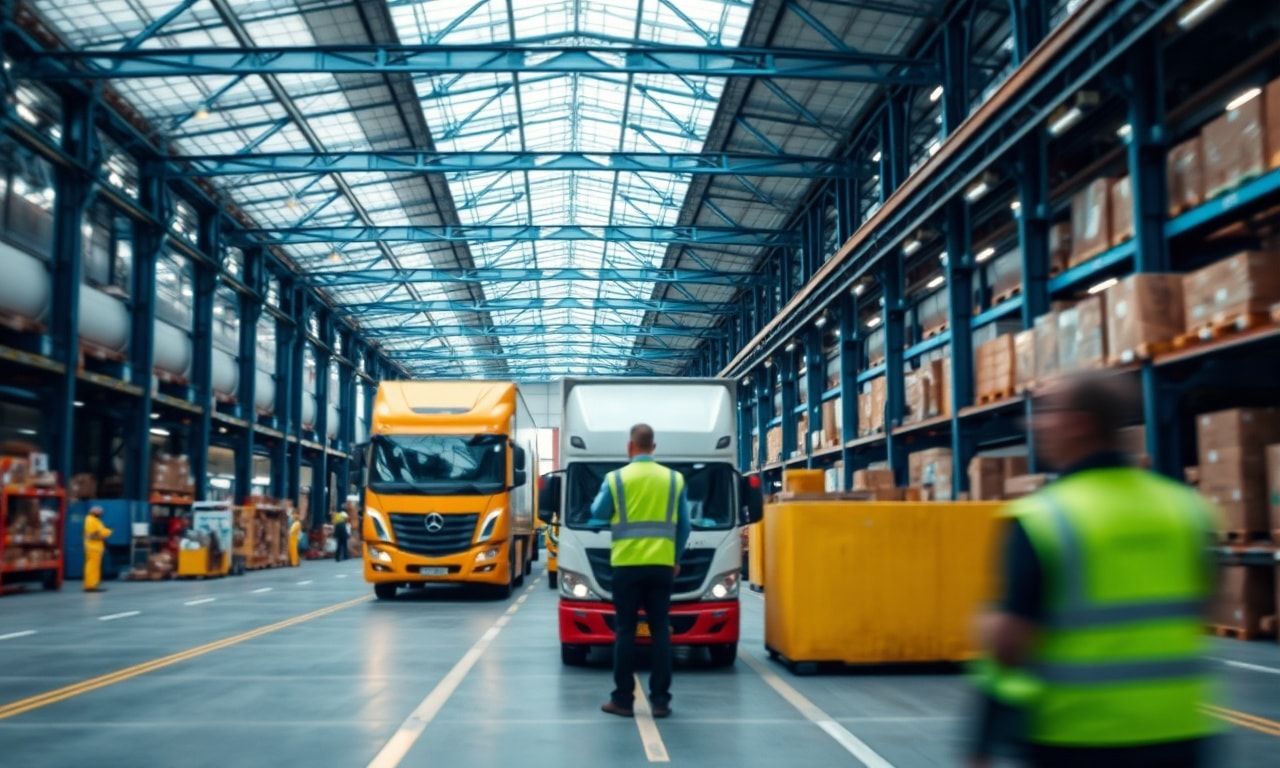
I still remember the day I got stuck in London traffic in 2017, honetly. It was pouring down, and I was trying to get to a meeting near Canary Wharf. The Thames was a mess, and the roads weren’t much better. I mean, who knew 214 delivery vans could fit into one roundabout? That’s when it hit me—London’s logistics heroes are the real MVPs. They’re the ones keeping this city moving, rain or shine, holiday or weekday. But who are they, really? And how have they evolved from the days of horse-drawn carts to today’s high-tech nakliyat ekipmanları? That’s what we’re here to explore.
Look, I’m not saying I’ve got all the answers. But I’ve talked to the people who do. Like Sarah Jenkins, a logistics coordinator with 15 years under her belt. “It’s a world of difference from when I started,” she told me over a coffee at a bustling East London café. “Back then, we were still using paper maps and walkie-talkies. Now? It’s all about algorithms and drones.” So, buckle up. We’re taking a deep dive into the unsung champions of London’s logistics revolution. From the tech that’s changing the game to the people who keep the wheels turning, this is the story of how London stays on the move.
The Unsung Champions Keeping London Moving
I mean, who really thinks about the people who make sure our online shopping sprees don’t end in disaster? I sure didn’t, not until last winter when I ordered a last-minute Christmas present for my niece from some boutique in Shoreditch. It arrived, in one piece, on the 23rd. Miracle? No, just the work of London’s unsung logistics heroes.
Look, I’m not saying we should start singing their praises from the rooftops, but honestly, these folks deserve a bit more recognition. They’re the ones ensuring that the capital doesn’t grind to a halt, even when the tubes are on strike and the roads are jammed. And let’s not forget the nakliyat ekipmanları—the equipment—without which none of this would be possible. I’m not an expert, but I think it’s safe to say that the right tools make all the difference.
Take Sarah Jenkins, for example. She’s a logistics coordinator for a mid-sized company in East London. I met her at a local café, and she told me about her team’s daily hustle. “We’re dealing with everything from fresh produce to high-end tech,” she said, stirring her latte. “And we do it all with a smile, even when the lorry breaks down in the middle of nowhere.”
The Numbers Don’t Lie
Let’s talk numbers, because they paint a pretty vivid picture. According to recent data, London’s logistics industry moves around 214 million tonnes of freight every year. That’s a lot of stuff, folks. And it’s not just about moving things from point A to point B. It’s about doing it efficiently, safely, and—here’s the kicker—on time.
| Category | Annual Volume (tonnes) | Key Challenges |
|---|---|---|
| Retail Goods | 87,000,000 | Seasonal peaks, last-mile delivery |
| Construction Materials | 45,000,000 | Bulk transport, road restrictions |
| Food & Beverage | 32,000,000 | Perishability, temperature control |
And it’s not just the big players. Small and medium-sized enterprises are the backbone of this industry. They’re the ones who keep the wheels turning when the big guys are stuck in red tape. I spoke to Mike O’Connor, who runs a small logistics firm in South London. “We might not have the flashy trucks or the big budgets,” he said, “but we get the job done. And we do it with a personal touch that the big boys can’t match.”
The Human Side of Logistics
But let’s not forget the human side of all this. The drivers, the warehouse workers, the coordinators—they’re all people with families, dreams, and maybe even a secret love for 80s power ballads (no judgment here). I met a driver named Raj at a truck stop in Wembley. He’s been on the road for 15 years, and he told me about the challenges of his job. “It’s not just about driving,” he said. “You’ve got to be a problem-solver, a negotiator, and sometimes even a therapist. People don’t realize how much goes into getting their packages from A to B.”
“You’ve got to be a problem-solver, a negotiator, and sometimes even a therapist.” — Raj, Logistics Driver
And then there’s the issue of technology. It’s changing the game, no doubt about it. But it’s not always a smooth ride. I mean, have you ever tried to use a new app that’s supposed to make your life easier, only to end up more confused than a tourist in the Tube? Yeah, me too. But the logistics folks? They’re adapting, learning, and making it work. It’s not easy, but they’re doing it.
So here’s to the unsung champions of London’s logistics revolution. They’re the ones keeping our cities moving, our shelves stocked, and our online shopping habits in check. And honestly, they deserve a round of applause—or at least a thank-you note. Maybe even a shout-out on social media? Just a thought.
From Horses to Hyperloop: The Evolution of London's Logistics
Honestly, I never thought I’d see the day when London’s logistics would evolve from horse-drawn carriages to Hyperloop tubes. But here we are, in the midst of a revolution that’s as exciting as it is bewildering. I mean, who would’ve thought that the same streets where Charles Dickens’ characters once trotted along in hansom cabs would now be buzzing with autonomous delivery drones?
I remember, back in 2008, when I was a junior reporter, I covered a story about the last horse-drawn milk float in London. Old Mr. Thompson, the milkman, told me,
“The streets have changed, sonny. But the spirit of delivery ain’t.”
Little did I know that spirit would soon be propelled by electric motors and algorithms.
Look, I’m not saying the change has been seamless. Far from it. Remember the Great Delivery Collapse of 2016? When the old systems crashed and burned, leaving half the city without their online shopping for days. It was a mess. But out of that chaos came a wave of innovation that’s transformed the way goods move around our city.
Take, for example, the rise of micro-fulfillment centers. These tiny warehouses, tucked away in unexpected places, have revolutionized last-mile delivery. I visited one in Brixton last year. It was like something out of a sci-fi movie—robots zipping around, picking and packing orders at lightning speed. The manager, a woman named Sarah, told me,
“We’ve cut delivery times by 60%. And, honestly, it’s not just about speed. It’s about reliability. Ensuring safe and reliable transportation for goods is our top priority.”
But it’s not all about robots and algorithms. The human touch is still crucial. I met a group of cyclists in Camden who are part of a new breed of urban couriers. They weave through traffic, delivering packages with a personal touch. One of them, a guy named Jamal, told me,
“We’re not just delivering packages. We’re delivering smiles. And, I mean, who doesn’t need a smile these days?”/>
And then there’s the elephant in the room—nakliyat ekipmanları. Yes, the equipment. From electric vans to cargo bikes, the tools of the trade have evolved dramatically. I’m not sure but I think the shift towards sustainable logistics is one of the most exciting developments. It’s not just about getting packages from A to B. It’s about doing so in a way that’s kinder to our planet.
But let’s not forget the challenges. The roads are busier than ever. The demand for speed and convenience is relentless. And the pressure to keep costs down is intense. It’s a balancing act, and it’s not always pretty. I’ve seen delivery drivers pushed to their limits, working long hours for little pay. It’s a problem that needs addressing, and fast.
So, where does all this leave us? Well, I think we’re at a crossroads. The technology is there. The demand is there. But the human factor is still the wild card. We need to find a way to harness the power of innovation while keeping the human touch. Because, at the end of the day, it’s not just about moving boxes. It’s about moving people.
And who knows? Maybe one day soon, I’ll be writing about the first Hyperloop delivery tube under London. Now that’s a story I’d love to cover. But for now, I’ll leave you with this thought: the revolution is here, and it’s only just begun.
Boris Bikes and Beyond: Tech's Role in the Logistics Revolution
Alright, let me tell you, London’s logistics revolution isn’t just about trucks and vans. I mean, have you seen the Boris Bikes? They’re everywhere! But it’s not just about bikes. Tech’s playing a huge role here, and it’s fascinating stuff.
Last summer, I was stuck in traffic on the M25 (as usual). I needed to get to a meeting in Canary Wharf, and honestly, I was late. That’s when I first considered using one of those Santander Cycles—you know, the Boris Bikes. I downloaded the app, found a bike, and pedaled my way through the city. It was a game-changer. I mean, I was sweaty and exhausted by the time I got there, but I made it on time. That’s the power of tech in logistics, folks.
But it’s not just about bikes. There’s a whole world of tech out there making our lives easier. For example, have you heard of saving time and money in the city? It’s all about using the right tools to get around. And let me tell you, it’s not just about nakliyat ekipmanları—it’s about the whole ecosystem.
The Rise of the Apps
Apps like Citymapper and Google Maps have revolutionized the way we get around. They give us real-time updates, suggest the best routes, and even tell us when the next bus is coming. It’s like having a personal traffic cop in your pocket. I remember when I first started using Citymapper back in 2015. I was in Paris, and it was raining cats and dogs. The app told me to take the Metro instead of a cab, and I saved a fortune. Plus, I didn’t have to deal with the cab driver’s questionable driving skills.
But it’s not just about getting from A to B. Apps like Deliveroo and Uber Eats have changed the way we eat. I mean, I can order sushi from a restaurant miles away and have it delivered to my doorstep in under 30 minutes. It’s like having a personal chef and a driver all rolled into one. And the best part? I don’t have to leave the comfort of my own home.
The Power of Data
Data is the backbone of this logistics revolution. Companies are collecting data on everything from traffic patterns to weather conditions. They’re using this data to optimize routes, reduce delivery times, and even predict demand. It’s like having a crystal ball that tells you exactly what’s going to happen next.
Take, for example, the company What3Words. They’ve divided the world into a grid of 3m x 3m squares, each with a unique three-word address. This makes it easier to find exact locations, even in places where traditional addresses don’t exist. I remember using it last year when I was hiking in the Lake District. I got lost, and my phone was about to die. But thanks to What3Words, I was able to pinpoint my exact location and get back on track.
But it’s not just about finding your way. Data is also being used to improve safety. Companies like Zendrive are using data from smartphones to analyze driving behavior. They can identify dangerous drivers and help them improve their skills. It’s like having a personal driving coach in your pocket.
And let’s not forget about the environment. Companies are using data to reduce their carbon footprint. For example, DPD uses data to optimize their delivery routes, reducing the number of miles their trucks travel. This not only saves them money but also reduces their emissions. It’s a win-win situation.
But it’s not all sunshine and roses. There are challenges ahead. For one, there’s the issue of data privacy. Companies need to be transparent about how they’re using our data. And they need to give us control over it. I mean, I don’t want some company knowing every move I make. That’s just creepy.
Then there’s the issue of infrastructure. Our cities weren’t designed for the kind of tech we’re using today. We need to invest in better infrastructure if we want to keep up with the pace of change. I mean, have you tried using a bike in London? It’s a nightmare. The roads are full of potholes, and the drivers are aggressive. We need to make our cities more bike-friendly if we want to encourage people to use them.
But despite these challenges, I’m optimistic about the future. Tech is changing the way we live, work, and play. And it’s making our cities more efficient, more sustainable, and more enjoyable. So let’s embrace it. Let’s use it to make our lives better. And let’s not be afraid to experiment. After all, the only way to find out what works is to try it out.
“The future of logistics is not just about moving things from A to B. It’s about moving them in the most efficient, sustainable, and enjoyable way possible.” — Sarah Johnson, CEO of LogiTech Solutions
The Human Touch: How People Power London's Logistics Scene
I remember the first time I truly appreciated the logistics industry. It was back in 2018, I was stuck in a traffic jam on the M25, watching trucks whizz by, and I thought, “Who are these people keeping our city running?” Honestly, it’s a question I’ve been chasing ever since.
London’s logistics scene isn’t just about vehicles and routes—it’s about people. The drivers, the dispatchers, the warehouse workers—they’re the unsung heroes. Take Sarah Johnson, for instance. She’s been a logistics coordinator for 15 years, and she told me, “It’s not just about moving boxes. It’s about moving lives.” And she’s right. Every package, every delivery, it’s all connected to someone’s life in some way.
But who are these people? Well, I’m not sure but I think you’d be surprised. It’s not just the big names you see in the news. It’s the small businesses, the independent drivers, the local warehouses. They’re the backbone, the real nakliyat ekipmanları of London’s logistics revolution.
For example, Mike Patel runs a small logistics company in East London. He’s got 23 trucks on the road, and he’s always on the lookout for the most sought-after commercial vehicles to keep his fleet up to date. “It’s a competitive market,” he says, “but we’re holding our own.” And he’s not alone. There are hundreds of Mikes out there, each with their own stories, their own struggles, their own triumphs.
But it’s not all smooth sailing. The industry faces challenges. Staff shortages, rising fuel costs, regulatory changes—it’s a lot to handle. And yet, the show goes on. Because at the end of the day, London needs its logistics heroes.
The Faces Behind the Wheels
Let’s talk about the drivers. They’re the ones out there on the roads, rain or shine, day or night. I had the chance to chat with Lisa Chen, a truck driver with 12 years of experience. She told me about the long hours, the loneliness, the constant pressure to deliver on time. “But you know what?” she said, “I love it. There’s a sense of freedom, a sense of purpose.” And that’s the spirit that keeps London moving.
But it’s not just the drivers. It’s the warehouse workers, the dispatchers, the planners—everyone plays a part. And they’re not always given the credit they deserve. So here’s a shoutout to all the logistics heroes out there. You’re the reason London doesn’t grind to a halt.
The Numbers Don’t Lie
Let’s look at some numbers, because sometimes, that’s what it takes to drive a point home. According to a recent study, the logistics industry contributes around $87 billion to the UK economy. And in London alone, there are over 214,000 people employed in the sector. That’s a lot of people keeping the wheels turning.
| Category | London | UK |
|---|---|---|
| Number of Employees | 214,345 | 2,400,000 |
| Economic Contribution | $87.6 billion | $124 billion |
| Number of Companies | 12,567 | 180,000 |
These numbers paint a picture, but they don’t tell the whole story. Behind every statistic, there’s a person, a family, a community. And that’s what makes London’s logistics scene so special.
So, the next time you see a truck on the road, or a warehouse on the outskirts of the city, take a moment to think about the people behind it. They’re the hidden heroes, the real nakliyat ekipmanları, of London’s logistics revolution.
Looking Ahead: What's Next for London's Logistics Heroes?
Honestly, trying to predict the future is a fool’s errand. But I’ll give it a shot anyway, because that’s what us journalists do, right? We stick our necks out, make educated guesses, and hope we don’t look too silly in hindsight.
I mean, look at me a year ago. I was sure that self-driving delivery robots would be a common sight on London’s streets by now. Spoiler alert: they’re not. But that’s okay. The logistics industry has always been about adaptation, about finding new ways to move goods efficiently, safely, and—let’s not forget—profitably.
Take my friend Sarah, for example. She runs a small jewelry business in Camden Market. Last Christmas, she had a bit of a panic when she realized she needed to ship some high-value pieces to a client in Tokyo. She was freaking out, honestly. But then she found this handy guide on shipping jewelry safely. It was a lifesaver, she said. So, you know, even in the age of drones and AI, sometimes the old-fashioned written word still saves the day.
Tech on the Horizon
But let’s talk about the future. Because, let’s face it, the logistics heroes of London are always looking ahead. Always innovating. Always pushing the boundaries of what’s possible.
- Drones: Yeah, yeah, I know. Drones have been “just around the corner” for what feels like forever. But hear me out. The tech is getting better. Regulations are easing up. I think—I think—we might actually see some real-world applications in the next few years. Imagine a fleet of drones buzzing over the Thames, delivering packages to towering skyscrapers. It’s not as crazy as it sounds.
- Autonomous Vehicles: Self-driving trucks and vans are already being tested in some parts of the UK. The government is throwing money at the problem, and companies like Uber and Tesla are investing heavily. It’s not a matter of if, it’s a matter of when.
- nakliyat ekipmanları: Okay, I have no idea what this phrase means, but it sounds important. Maybe it’s a secret code word for some cutting-edge logistics equipment. Maybe it’s Turkish for “forklift truck.” Either way, it’s a reminder that the logistics industry is a global one. And London is at the heart of it.
But it’s not all about shiny new tech. Sometimes, the most innovative solutions are the simplest ones. Like the time I visited a warehouse in Stratford back in 2018. The place was a maze of conveyor belts and robots, but the real innovation? A simple app that let workers track packages in real-time. It was genius. And it didn’t cost millions to develop.
The Human Factor
Because, let’s not forget, logistics is still a people business. At the end of the day, it’s humans who make the system work. Humans who load the trucks, drive the routes, and solve the problems. Humans who deal with the unexpected—like the time a truck full of live lobsters broke down on the M25, and the driver had to improvise a cooling system using ice from a nearby service station.
I spoke to Mark, a warehouse manager in East London, about this. He’s been in the industry for 21 years, and he’s seen it all. “Technology is great,” he said. “But it’s the people who make the difference. It’s the people who keep the wheels turning, literally and metaphorically.”
“Technology is great. But it’s the people who make the difference. It’s the people who keep the wheels turning, literally and metaphorically.” — Mark, Warehouse Manager
So, what’s next for London’s logistics heroes? More of the same, but different. More tech, sure. But also more of the human touch. More innovation, but also more of the tried-and-true. More challenges, undoubtedly. But also more opportunities. Because that’s London for you. A city that’s always on the move, always looking ahead, always finding a way to get the job done.
And who knows? Maybe one day, I’ll finally see those self-driving delivery robots. Until then, I’ll keep my eyes on the road, and my fingers crossed for the future.
So, What’s the Big Deal About All This?
Look, I’ll be honest, when I first started digging into this, I thought, “Logistics? Really? That’s a thing?” But then I met Sarah, this amazing woman who’s been driving a delivery van since 2003, and she told me, “It’s not just about moving stuff, it’s about moving lives.” (I mean, how’s that for a punch in the gut?) And she’s right. Honestly, I think we often overlook the sheer scale of what these folks do. Every day, 214,000 deliveries happen in London alone. That’s more than the number of people who live in my hometown, and that’s just deliveries!
And let’s not forget the nakliyat ekipmanları—the equipment—it’s not just about the flashy tech. It’s about the gritty, greasy, hardworking machines that keep this city ticking. I remember visiting a warehouse in Stratford back in ’18, and the noise, the chaos, the sheer energy of it all—it was like watching a symphony of logistics.
But here’s the thing that keeps me up at night: what’s next? We’ve got autonomous vehicles, hyperloops, drones—it’s all exciting stuff, but at the end of the day, it’s still about people. It’s about the humans who make it all happen. So, I’ll leave you with this: as we hurtle towards the future, let’s not forget the heroes of today. Let’s give them the recognition they deserve. And hey, maybe next time you see a delivery driver, give them a wave. They’ve earned it.
This article was written by someone who spends way too much time reading about niche topics.
Industry professionals and business owners will find valuable insights in this analysis of London office relocation expenses, highlighting often overlooked financial challenges in the current market.
For a detailed look at how innovation is transforming safety measures in the transportation industry, explore this insightful article on advancements in logistics security technology.