
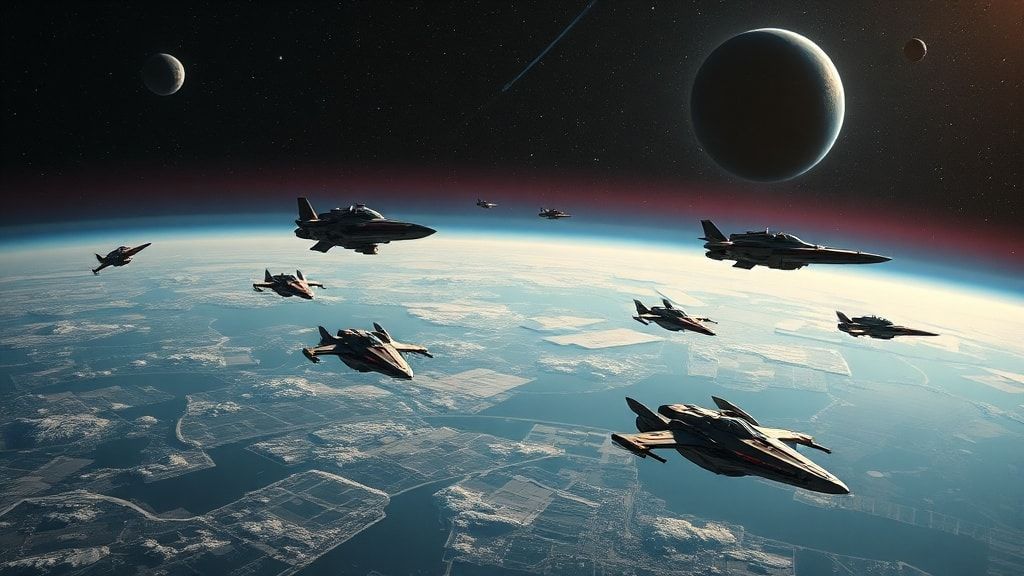
What if the fate of entire civilizations hinged not on brute force, but on cunning strategy and precise calculation? Space strategy and galactic warfare games have seized the imaginations of millions worldwide, blending intricate planning with the vast, uncharted expanse of the cosmos. These digital arenas are more than mere entertainment—they echo the complexities of interstellar diplomacy, resource management, and tactical combat, challenging players to think several moves ahead in environments free from terrestrial constraints. Among these, the Play OGame Online experience stands out, inviting users to command fleets and forge empires in a persistent universe where every decision can tip the balance of power. This article charts the ascendancy of space strategy games as cultural phenomena, examines the deep tactical elements that define galactic warfare, and explores how cutting-edge technology fuels these cosmic conflicts. It also peers behind the scenes, unpacking the mindset of commanders operating under zero-gravity pressure, and considers the surprising ways these virtual struggles influence real-world space exploration and innovation. Prepare for a voyage through the high-stakes, high-tech theaters where strategy meets the stars—where every choice could mean survival or obliteration.
Charting the Cosmos: The Rise of Space Strategy Games as a Cultural Phenomenon
Space strategy games have soared from niche hobbies to major cultural phenomena, captivating millions worldwide with their blend of intricate tactics and sprawling galactic narratives. These games invite players to command fleets, manage resources, and engage in diplomacy or warfare on a cosmic stage—offering a complex playground where strategic thinking meets imagination. Titles like OGame Mega Game have been at the forefront, drawing in a diverse audience eager to test their mettle against both AI and human opponents.
- 🚀 Explore vast universes filled with unique star systems
- 🛠 Master resource management and technological research
- 🛰 Engage in diplomacy or ruthless galactic warfare
The appeal goes beyond mere entertainment: these games foster communities and competitive scenes where tactics evolve constantly. Their dynamic environments challenge players to adapt quickly to emerging threats and alliances, creating a living, breathing digital cosmos. This evolution has led to the emergence of comprehensive game universes where players often spend years investing in their empire’s growth and politics.
| Game Feature | Casual Players | Hardcore Strategists |
|---|---|---|
| Resource Management | Basic, simplified | Detailed, multi-layered |
| Combat Complexity | Turn-based, forgiving | Real-time, highly tactical |
| Multiplayer Interaction | Limited alliances | Deep diplomacy and rivalry |
The rise of browser-based titles like OGame Mega Game has made these experiences more accessible, removing barriers to entry while retaining depth. Players can jump into the action from virtually any device, fueling the growth of global player bases and competitive leagues. It’s this combination of accessibility and layered complexity that cements space strategy games as a standout genre in contemporary gaming culture.
💡 Pro Tip: For newcomers eager to immerse themselves in galactic warfare, starting with browser-based platforms like OGame Mega Game can offer a balanced introduction to strategic gameplay without heavy downloads or setups.
Tactics Among the Stars: Decoding the Art of Galactic Warfare
Galactic warfare demands a multifaceted approach, blending strategic foresight with real-time decision making. Commanders must balance offensive strikes with defensive postures, considering resource management, fleet composition, and intelligence gathering. Every move can shift the power dynamic, forcing players to anticipate enemy responses and adapt accordingly. The interplay of these elements forms the backbone of how conflicts unfold across star systems.
- 🎯 Prioritize scouting to gather information on enemy fleet strength and movement
- 🔑 Maintain a balanced mix of ship types for versatility in battle
- ⚡ Use resource-rich targets to fund ongoing war efforts and fleet upgrades
- ✅ Coordinate with allies for combined strategic assaults
Players engaged in the OGame Combat Jeu find that mastering these tactics can mean the difference between dominance and defeat. The game’s mechanics reward those who effectively leverage timing, surprise, and technological advantages. In such an environment, understanding how to optimize fleet deployment and attack vectors is essential for survival.
| Aspect | Offensive Strategy | Defensive Strategy |
|---|---|---|
| Primary Goal | Disrupt enemy operations and seize territory | Protect assets and maintain control of key systems |
| Typical Fleet Composition | High damage ships, fast units for hit-and-run | Heavily armored, support ships with repair abilities |
| Resource Focus | Expansion and acquisition | Preservation and fortification |
Adapting tactics according to the evolving galactic scenario remains a constant challenge. Players must weigh choices carefully: a reckless strike might cripple their forces, while overly cautious play can allow opponents to build overwhelming power. Thus, the art of galactic warfare is not just about raw strength but also about keen judgment and timing.
💡 Pro Tip: Staying flexible in strategy and leveraging intelligence on enemy movements provides a critical edge. Combining this with a well-balanced fleet enhances both offensive and defensive capabilities in the OGame Battle Universe.
Tech Titans and Starship Designs: What Powers the Battles in Space
In space strategy games, the clash of tech titans manifests most vividly through starship designs and technological advancements. Players invest heavily in crafting fleets that balance speed, firepower, and defense, while optimizing resource management. The sophistication of ship designs—from nimble scouts to towering battleships—defines the outcome of galactic confrontations. Engineering prowess in these games often mirrors real-world aerospace principles, adding layers of complexity that enthusiasts savor.
- 🚀 Prioritize upgrading propulsion systems to increase fleet maneuverability.
- 🛡️ Invest in defensive modules to withstand prolonged battles.
- ⚙️ Balance resource allocation between research and construction to maintain technological edge.
- 🔍 Scout enemy fleets regularly to anticipate tactical shifts.
Technological innovation is not just about raw power—it’s also strategic flexibility. Some players choose to specialize in rapid attack ships, while others build heavily armored cruisers that can endure long sieges. The dynamic nature of the tech trees demands constant adaptation. For those interested in the competitive aspects and evolving player strategies, the Inside the Universe of Competitive space strategy scenes offers a fascinating look into how design choices influence warfare outcomes.
| Starship Class | Primary Attribute | Strategic Use |
|---|---|---|
| Interceptor | Speed | Hit-and-run tactics, reconnaissance |
| Destroyer | Firepower | Offensive strikes, fleet skirmishes |
| Carrier | Support | Deploys drones, fleet reinforcement |
Advanced tech isn’t just limited to ships; players also enhance battlefield control through modules like electronic warfare suites, shield generators, and cloaking devices. The interplay of these systems dictates battlefield dominance. This technological arms race makes every encounter unpredictable and thrilling.
💡 Pro Tip: Diversify your fleet composition to counter a range of enemy tactics, exploiting known weaknesses through tech specialization.
Behind Enemy Lines: The Psychology of Command in Zero Gravity Conflicts
Commanding forces in zero gravity adds a layer of psychological stress rarely encountered in terrestrial warfare. Space commanders must swiftly adapt to altered perceptions of space and time, maintaining clarity amid disorienting conditions. The absence of gravity not only challenges physical coordination but also cognitive processing, affecting decision-making under pressure.
- ✅ Maintain situational awareness through continuous information updates.
- ⚡ Employ mental resilience techniques to counter fatigue and stress.
- 💡 Prioritize clear communication protocols to avoid misunderstandings.
- 🔑 Foster teamwork despite physical separation and technological mediation.
Understanding the psychological demands of command is vital, especially as digital empires rise and complex strategies unfold in games like the OGame Battle Universe. This digital battleground replicates the tension of real space strategy by requiring commanders to balance resource management with tactical foresight, echoing the mental agility needed in actual zero gravity conflicts.
| Mental Challenge | Zero Gravity Impact | Command Response |
|---|---|---|
| Spatial Disorientation | Altered gravity skews perception of orientation and distance. | Use technological aids and training to recalibrate spatial awareness. |
| Stress and Fatigue | Increased cognitive load due to environmental novelty and isolation. | Implement stress management protocols and rotate command duties. |
| Communication Delays | Signal lag can disrupt timely coordination. | Develop pre-planned strategies and autonomous decision-making frameworks. |
💡 Pro Tip: Commanders benefit from simulations that mimic zero gravity conditions to hone their psychological endurance and quick-thinking skills before actual deployments.
These psychological nuances underscore the evolving nature of space warfare command. As strategies advance, so does the need for commanders to cultivate not just tactical expertise but mental fortitude—qualities that will determine victory beyond Earth’s atmosphere.
From Screen to Reality: How Space Strategy Inspires Real-World Exploration and Innovation
Space strategy games like OGame Battle Universe have moved beyond mere entertainment, sparking interest in real-world space exploration and technological innovation. These games simulate complex decision-making, resource management, and tactical combat, echoing challenges faced by aerospace researchers and engineers. By engaging players in strategic thinking about space colonization and warfare, they inadvertently cultivate skills and ideas relevant to advancing actual space missions.
- 🎯 Encourages strategic planning skills applicable to aerospace problem-solving
- 💡 Inspires interest in STEM fields by presenting space exploration in an accessible format
- 🔑 Fosters understanding of resource allocation and logistics in constrained environments
The crossover doesn’t stop at intellectual inspiration. Technologies conceptualized or popularized in galactic warfare games influence real design thinking. For instance, virtual simulations are used extensively by researchers to model spacecraft navigation and defense systems. This symbiosis between virtual strategy and practical science fuels innovation in satellite technology, propulsion systems, and autonomous robotics.
| Aspect | In-Game Representation | Real-World Application |
|---|---|---|
| Resource Management | Gathering and balancing energy, minerals, and fleets | Satellite fuel budgeting, supply chain logistics for space missions |
| Tactical Combat | Fleet formations and targeted attacks | Defense strategies for space debris and micro-meteoroid shielding |
| Exploration | Discovering new planets and star systems | Planetary surveys and mission planning for Mars rovers |
Beyond technology and science, the cultural zeitgeist around space strategy games subtly reflects broader trends, including fashion and lifestyle inspired by futuristic aesthetics. It might seem unrelated, but even classic accessories find new life amid this enthusiasm for space-themed style. For readers interested in how traditional pieces are reimagined in a modern context, how classic accessories are making bold modern statements offers an intriguing perspective that complements the forward-looking spirit of space exploration.
💡 Pro Tip: For enthusiasts looking to bridge the gap between gaming and real-world exploration, keeping up with advancements in aerospace technology and participating in forums that discuss space strategy games alongside scientific developments can provide valuable insights and networking opportunities.
Final Frontiers: What Space Strategy Games Teach Us About the Universe
Space strategy and galactic warfare games do more than entertain—they offer a lens through which players and creators alike explore complex systems of conflict, leadership, and innovation beyond our planet. From the meticulous art of starship design to the psychological grit required to command forces in zero gravity, these games mirror real-world challenges in an engaging format. They spark curiosity about the cosmos and the technology that might one day take humanity to the stars. The impact of titles like OGame Battle Universe extends beyond screens, inspiring players to dream of future exploration and even contribute to scientific advancement by nurturing strategic thinking and problem-solving skills.
As the boundary between gaming and reality blurs, one wonders: How much can these virtual galactic battles inform our actual approach to space exploration and international cooperation in the years ahead? The universe remains vast and mysterious—offering infinite scenarios for both gamers and real-world explorers to play out. Perhaps the greatest thrill lies not just in victory, but in imagining what comes next beyond the star-studded horizon.
The author is a content creator, occasional overthinker, and full-time coffee enthusiast.