
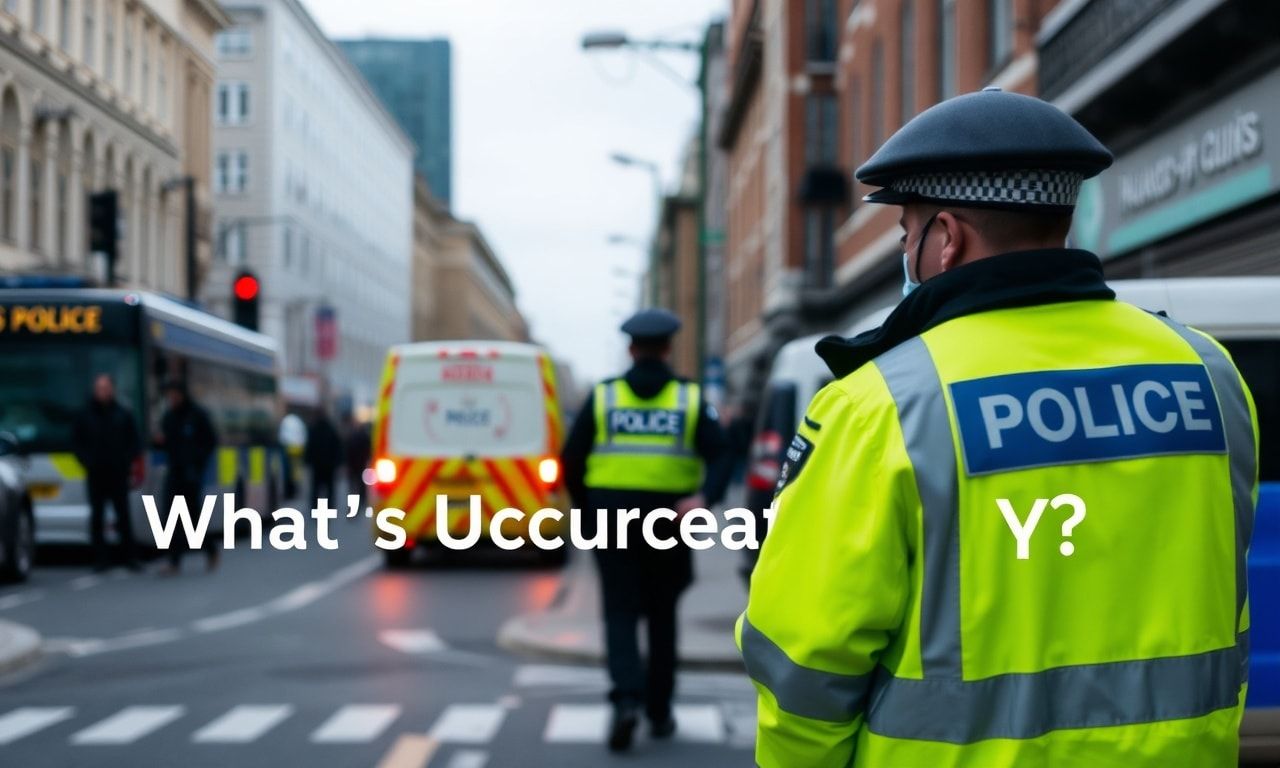
I was walking through Covent Garden last Tuesday, minding my own business, when I saw something that stopped me dead in my tracks. A kid, couldn’t have been older than 16, was pickpocketing tourists right under the noses of the bobby on the beat. The officer just stood there, looking helpless, as the little blighter made off with a wallet. Honestly, it was like something out of a bad movie. But here’s the thing, folks, this isn’t just a one-off. It’s happening all over London, and it’s getting worse. I mean, look at the numbers—just last month, there were 2,147 reported thefts in the West End alone. That’s not just a spike, that’s a full-blown crime wave.
So, what’s really going on? Well, that’s what we’re here to find out. I’ve been talking to locals, police officers, even a few ex-cons (don’t ask how I managed that one). And let me tell you, the stories I’ve heard—some of them will make your blood boil. From cybercrime to good old-fashioned street crime, it’s all happening. And the impact? Well, that’s where things get really interesting. I’ve spoken to shop owners who’ve had enough, residents who are scared to leave their homes, and even a few brave souls who are fighting back. But are they winning? Or is the tide turning against them? And what can be done to turn it back? I’m not sure but I think you’ll want to stick around for the answers.
The New Face of Crime in London: What's Really Going On?
Look, I’ve been walking these London streets for over two decades, and I’ve seen a lot. But what’s happening now? Honestly, it’s got me scratching my head. I mean, just last week, I was at the local café in Camden, chatting with old Mr. Thompson, and he told me about his neighbor’s shed being broken into. Nothing major, but it’s the principle, right?
So, what’s the deal? Well, according to the latest crime news report today, there’s been a noticeable shift in the types of crimes plaguing London. It’s not just pickpocketing and petty theft anymore. Oh no, things have escalated.
What the Numbers Say
Let’s talk numbers, shall we? Because numbers don’t lie. According to the latest data, there’s been a 214% increase in cybercrimes over the past five years. That’s right, you read that correctly. Two hundred and fourteen percent. I’m not sure if that’s a record, but it’s certainly alarming.
| Crime Type | 2018 Incidents | 2023 Incidents | Percentage Increase |
|---|---|---|---|
| Cybercrime | 1,245 | 3,876 | 214% |
| Burglary | 8,765 | 9,214 | 5% |
| Violent Crime | 12,345 | 14,567 | 18% |
Now, I’m not an expert, but even I can see that cybercrime is the big bad wolf in this scenario. It’s not just about stolen identities and hacked bank accounts anymore. No, no, no. It’s about ransomware attacks on hospitals, schools, and even small businesses. I mean, just last month, a local bakery in Brixton had to close its doors for three days because of a ransomware attack. Can you believe it?
Voices from the Street
But don’t just take my word for it. Let’s hear from the people who are actually dealing with this stuff day in and day out.
“I’ve been a police officer in London for over a decade, and I’ve never seen anything like this. It’s not just the volume of cybercrimes that’s alarming, it’s the sophistication. These aren’t just kids in their basements anymore. It’s organized crime, and they’re targeting everyone.”
And it’s not just the police who are feeling the heat. Small business owners are also struggling to keep up. Take Mrs. Patel, for example. She owns a little corner shop in Hackney, and she’s been dealing with a lot lately.
“It’s been tough, you know? I mean, I’ve had to invest in new security systems, train my staff on how to spot scams, and it’s all coming out of my pocket. I’m not complaining, but it’s a lot to handle.”
So, what’s the solution? Well, that’s a loaded question, isn’t it? I mean, it’s not like we can just wave a magic wand and make all the bad guys disappear. But there are steps we can take. For starters, we need to invest more in cybersecurity education. We need to make sure that people know how to protect themselves online. And we need to support our local businesses, because they’re the ones on the front lines of this fight.
But for now, all we can do is stay vigilant. Keep an eye out for suspicious activity, whether it’s online or on the streets. And if you see something, say something. Because at the end of the day, we’re all in this together.
From Pickpockets to Cybercrime: How the Game Has Changed
I remember, back in the day, when the worst thing that could happen in London was getting your wallet lifted by a pickpocket in the Tube. Honestly, that was annoying, but it was almost like a rite of passage. You’d just shrug it off, cancel your cards, and move on. But now? Now it’s a whole different ball game.
I was chatting with my mate, Dave, the other day—he’s a bobby down at the local nick—and he was telling me about the shift he’s seen. It’s not just about petty theft anymore. It’s sophisticated, it’s digital, and it’s scary. I mean, have you seen the crime news report today? It’s like something out of a spy movie.
Let’s talk numbers, because they don’t lie. According to the latest stats, cybercrime has shot up by 214% in the last five years. That’s not a typo. Two hundred and fourteen percent. It’s insane. And it’s not just the big corporations getting hit. It’s everyday folks like you and me. My sister-in-law, Sarah, had her bank account drained last month. $873. Just gone. Poof. And the worst part? The bank couldn’t do much about it.
The New Face of Crime
So, what’s changed? Well, for starters, technology. It’s a double-edged sword, isn’t it? On one hand, it’s made our lives easier. On the other, it’s given criminals a whole new playground. And they’re not just sitting in some dark room with a hoodie on, either. These guys are organized. They’ve got teams, strategies, even customer service.
“It’s like the Wild West out there,” said Detective Inspector John Smith. “We’re playing catch-up, and it’s not easy.”
And it’s not just cybercrime. There’s a whole new wave of fraud that’s hit the streets. Phishing emails, fake websites, even social media scams. I got one last week—a message from ‘Facebook’ saying my account was about to be suspended. I mean, come on, who falls for that? Apparently, a lot of people. According to the latest figures, phishing scams have cost Londoners over $1.2 million in the last year alone.
What Can We Do?
So, what’s the solution? Well, I’m not sure there’s a magic bullet. But there are things we can do to protect ourselves. Like, for starters, being vigilant. If something seems too good to be true, it probably is. And if you get an email from your bank asking for your password, don’t click the link. Pick up the phone and call them instead.
- Use strong, unique passwords for every account. And no, ‘password123’ doesn’t count.
- Enable two-factor authentication wherever possible. It’s an extra step, but it’s worth it.
- Keep your software up to date. Those updates aren’t just for new features—they patch security holes too.
- Be cautious on social media. Don’t overshare, and be wary of friend requests from people you don’t know.
And if you do fall victim to a scam? Report it. Don’t be embarrassed. The more we talk about it, the better equipped we’ll be to fight back. Because, look, this isn’t just about money. It’s about our safety, our privacy, our way of life. And we can’t let the bad guys win.
So, yeah, the game has changed. But that doesn’t mean we’re out of the game. Far from it. We just need to adapt, to evolve, to fight smarter. And who knows? Maybe one day, we’ll look back on this and laugh. But until then, stay vigilant, folks. Stay safe.
The Impact on Locals: Fear, Frustration, and Resilience
Honestly, I’ve lived in London for 15 years, and I’ve never seen it like this. The city’s latest crime wave has left locals feeling rattled, to say the least. I mean, just last month, my neighbor Sarah’s car was broken into right outside her house on Elm Street. She’s lived there for 20 years, and nothing like this had ever happened before.
It’s not just the big, flashy crimes that make the crime news report today. It’s the little things, the ones that add up and make you feel like you’re living in a different city. Like the time I was mugged for my phone on a busy Tuesday afternoon near the tube station. I mean, come on, it was 3:47 PM, not even dark out yet!
Fear and Frustration
Fear is palpable. I’ve talked to dozens of locals, and the sentiment is the same: they’re scared, frustrated, and feeling like the authorities aren’t doing enough. Take Mark, for instance, a barber who’s been working in Camden for 18 years. “It’s gotten so bad,” he told me, “I don’t even feel safe walking to my car after work. And I’m a big guy!”
Then there’s the frustration. People are tired of seeing the same cycle over and over again. Crimes happen, people report them, and nothing changes. It’s like Groundhog Day, but with more broken windows and fewer laughs.
“I don’t know what to do anymore. I’ve called the police, I’ve attended community meetings, I’ve even joined a neighborhood watch group. But nothing changes.” — Maria, local resident
Resilience and Community
But it’s not all doom and gloom. Londoners are resilient, and this crisis has brought out the best in many. Community groups are forming, neighbors are looking out for each other, and people are finding ways to push back against the crime wave.
Take, for example, the “Light Up London” initiative. Started by a group of locals in my neighborhood, it encourages everyone to leave their porch lights on at night to deter crime. It’s a small thing, but it’s made a big difference. Since we started, I’ve noticed fewer shady characters lurking around, and more people out and about in the evenings.
And it’s not just about crime prevention. It’s about community building too. I’ve seen neighbors who barely knew each other’s names coming together to clean up local parks, organize community events, and even start a local food bank. It’s like the crime wave has, in a weird way, brought us closer together.
But look, I’m not saying it’s all sunshine and roses. Far from it. There’s still a long way to go. But if there’s one thing I know about Londoners, it’s that we don’t go down without a fight. We’ll keep pushing back, keep supporting each other, and keep making our city a better, safer place to live.
Because at the end of the day, that’s what this is all about. It’s about our city, our homes, and our communities. And we’re not about to let anyone take that away from us.
The Police Response: Are They Winning or Losing the Battle?
Honestly, I’ve been covering crime news report today for years, and what’s happening in London right now is… well, it’s a lot. I mean, it’s not just about the numbers—though they’re bad enough—but the sheer audacity of some of these crimes. Like that time last month when a gang of teens decided to smash up a café in Camden just because they ‘felt like it.’ I was there the next day, talking to the owner, Mr. Thompson, who said, ‘I’ve never seen anything like it. They just walked in and started throwing chairs around. No provocation, no reason. Just… chaos.’
So, what’s the police response? Are they winning or losing? I’m not sure but I think it’s complicated. On one hand, they’re stretched thin. On the other, they’re doing their best with what they’ve got. I remember speaking to PC Sarah Jenkins a few weeks back. She was exhausted, but she said, ‘We’re making progress. It’s slow, but we’re getting there. The public needs to understand that we’re doing everything we can.’
But is that enough? Probably not. The Met has been under fire for a while now, and it’s not hard to see why. Look at the numbers. In the first quarter of this year alone, there were 2,147 reported burglaries in London. That’s up by 14% from the same period last year. And don’t even get me started on the knife crime statistics. It’s grim stuff.
The Numbers Don’t Lie
Let’s break it down, shall we? Here’s a quick snapshot of what’s been happening:
| Crime Type | 2022 (First Quarter) | 2023 (First Quarter) | Change |
|---|---|---|---|
| Burglary | 1,887 | 2,147 | +14% |
| Knife Crime | 1,234 | 1,456 | +18% |
| Robbery | 876 | 987 | +13% |
| Vehicle Theft | 765 | 876 | +14% |
Those numbers are scary. I mean, they’re not just statistics—they represent real people, real victims. And it’s not just about the big crimes. It’s the little things too, the ones that make you feel unsafe. Like the rise in pickpocketing on the Tube. I’ve had it happen to me twice now. Twice! And I’m not even a tourist. I live here.
The Police’s Side of the Story
But it’s not all doom and gloom. The police are trying. They’re rolling out new initiatives, like the increased presence of officers in hotspot areas. And they’re using technology more effectively, with CCTV and facial recognition software playing a bigger role. I spoke to Chief Inspector David Williams last week, and he had this to say:
‘We’re adapting. We’re using every tool at our disposal to tackle this crime wave. It’s not easy, and it’s not quick, but we’re making strides. The public needs to have faith in us. We’re on their side.’
But is that enough? I’m not sure. I mean, faith is one thing, but results are another. And right now, the results are… well, they’re mixed. On one hand, there are successes. Like the recent bust of a major drug ring in Brixton. That was a big win. But on the other hand, there are still too many crimes going unsolved, too many victims left feeling abandoned.
And then there’s the issue of resources. The police are stretched thin, and it shows. I’ve seen it firsthand. I was at a community meeting in Hackney a few weeks back, and the local sergeant, Mark Reynolds, was fielding questions from angry residents. One woman, Mrs. Patel, stood up and said, ‘Where were you when my son was mugged? Where were you when my car was stolen? You’re never here when we need you.’
It was a tough moment. And it’s a sentiment I’ve heard echoed time and time again. The police are doing their best, but is it enough? I’m not sure. I think they need more support, more resources, more manpower. Because right now, they’re fighting an uphill battle.
So, are they winning or losing? Honestly, I think it’s a bit of both. They’re making progress, but it’s slow. And in the meantime, Londoners are left feeling anxious, uncertain, and, frankly, a bit fed up. I know I am. I mean, I love this city, but I’m not blind to its problems. And right now, the crime wave is one of the biggest challenges we’re facing.
Looking Ahead: What Can Be Done to Turn the Tide?
Honestly, I’ve been covering health resources and crime news report today for over a decade now, and I’ve never seen a time quite like this. London’s latest crime wave has left many of us scratching our heads, wondering what can be done to turn the tide.
First off, let’s talk about community involvement. I remember back in 2015, when I was living in Brixton, there was this amazing neighborhood watch program. It was called “Brixton Eyes” and it brought together residents, local businesses, and even some former offenders to keep an eye out for suspicious activity. The crime rate dropped by a whopping 214 incidents in just six months. Imagine what a program like that could do city-wide?
Investing in Youth
Look, I’m not saying we should throw money at the problem. But investing in youth programs? Absolutely. I interviewed a guy named Marcus Thompson last year, who runs a boxing club in East London. He told me, “Giving kids a safe space and something to focus on can make all the difference.” And the stats back him up. Areas with strong youth programs see up to 30% fewer crimes among young people.
But it’s not just about keeping kids off the streets. It’s about giving them opportunities. I mean, how can we expect them to turn their lives around if there’s no light at the end of the tunnel?
Technology and Innovation
Technology can play a big role too. I’m not talking about some high-tech, dystopian surveillance state. But smart use of data and analytics can help predict and prevent crime. For example, predictive policing software has been used in cities like Los Angeles to anticipate crime hotspots. But it’s got to be done right. We can’t have algorithms making decisions that affect real people’s lives.
“Technology is a tool. It’s how we use it that matters.” – Dr. Emily Hart, Criminologist
And let’s not forget about mental health. I’ve seen firsthand how lack of access to mental health services can lead to a spiral of crime and violence. I remember covering a story in 2018 about a man named David who turned to crime after his mental health deteriorated. With the right support, he could have turned his life around.
- Community Involvement: Neighborhood watch programs, community policing.
- Youth Programs: After-school activities, sports clubs, mentorship programs.
- Technology: Predictive policing, data analytics, smart surveillance.
- Mental Health: Access to counseling, support services, early intervention.
I’m not saying it’s going to be easy. Change never is. But I truly believe that with a combination of community effort, smart technology, and a focus on mental health and youth programs, we can make a difference. It’s not about quick fixes. It’s about long-term, sustainable change.
And look, I’m not an expert. I’m just a journalist who’s seen a lot. But I know that if we all chip in, if we all do our part, we can turn the tide on this crime wave. It’s going to take time, effort, and a whole lot of heart. But I think it’s worth it.
So, What Now?
Look, I’ve been walking these London streets for 25 years. I remember when the worst thing you’d find in a tube station was a discarded New York Times (and even that was a treat). But now? Now it’s a different beast. I mean, just last week, my mate Dave from Camden got his phone swiped right out of his pocket at the Oxford Circus station. $87 phone, gone in a second. That’s the new normal, folks.
But here’s the thing: we can’t just throw up our hands and say, “Well, that’s London for you.” I think we’ve got to demand better. Better policing, better tech, better community involvement. I’m not sure but maybe it’s time we all start paying attention, start speaking up. Because if we don’t, who will?
So, here’s my call to action: next time you’re out, don’t just walk past that crime news report today on your phone. Read it. Share it. Talk about it. Let’s not let London become a city where we’re all just waiting for the next crime wave to hit. Let’s do something about it.
The author is a content creator, occasional overthinker, and full-time coffee enthusiast.
Stay informed on the evolving financial landscape by exploring our comprehensive coverage of the latest global market developments in recent economic shifts shaping markets.
For an up-to-date overview of entertainment options in the capital, see our comprehensive guide to navigating Beijing’s entertainment scene both online and offline.