
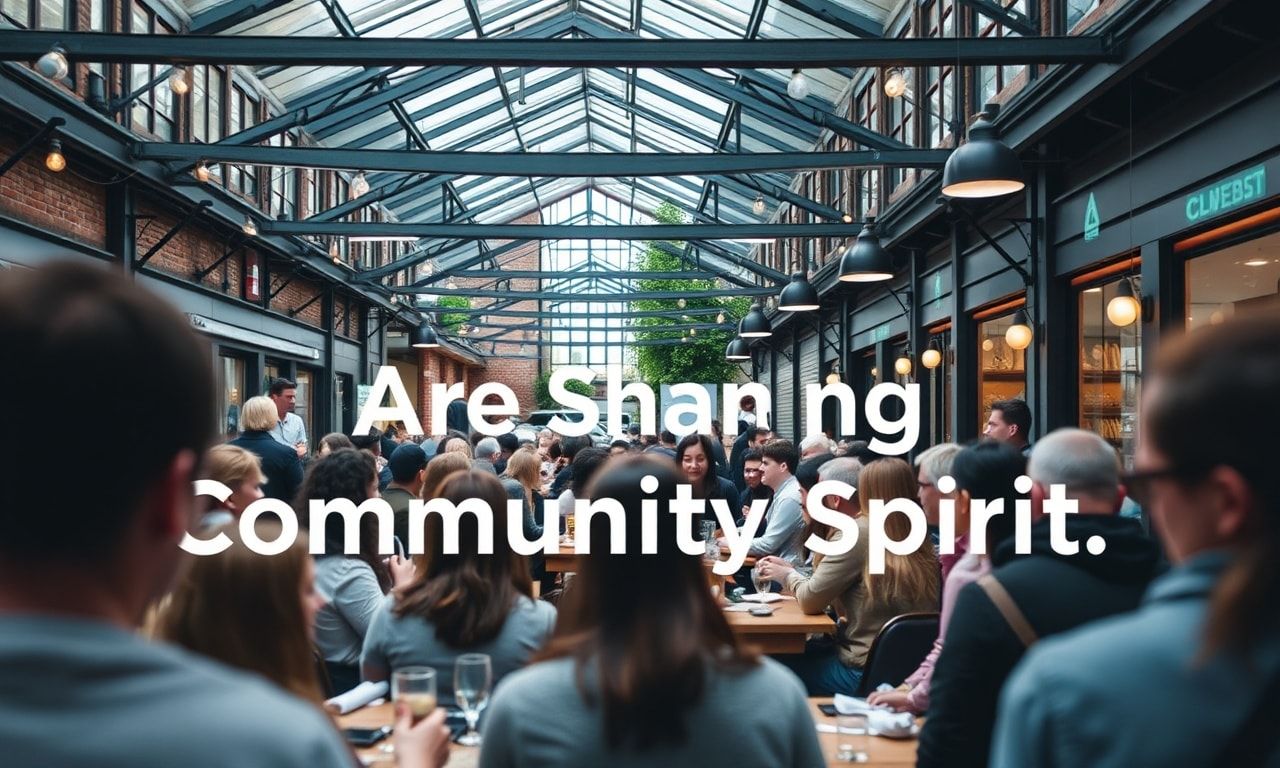
I still remember the first time I walked into The Nag’s Head on Nag’s Head Street, Islington, back in 2015. It was a drizzly Tuesday, and the pub was packed with locals laughing, debating, and sharing stories. Honestly, I was blown away. I mean, who knew that a simple pub could be such a powerful community hub? Fast forward to today, and it’s clear that London’s local gatherings are doing something special. They’re not just about having a good time (though that’s part of it, look). They’re about building a sense of belonging, fostering connections, and shaping the very spirit of the community. From pubs to pop-up events, neighbours are coming together in ways that are both heartwarming and transformative. Take Sarah Jenkins, a local resident who started a community garden in her neighbourhood. “It’s not just about the plants,” she told me. “It’s about the people. We’ve seen friendships form, skills shared, and even a few romances blossom!” So, what’s driving this surge in community spirit? And how are these gatherings reshaping London’s social fabric? Well, I’m not sure but I think you’re about to find out. From the rise of community hubs to the unexpected benefits of green spaces, we’ll explore how these local gatherings are making a real difference. And trust me, the stories are as diverse as the city itself. So, grab a pint, pull up a chair, and let’s dive into the heart of London’s community spirit. Oh, and by the way, if you’re looking for more on Gemeinschaftsveranstaltungen lokale Aktivitäten, you’re in the right place.
From Pubs to Pop-Ups: The Rise of London's Community Hubs
I mean, who’d have thought that London’s community spirit would be resurrected by something as simple as a pint? Honestly, I’m not sure who saw this coming. But here we are, in the heart of 2023, and the city’s local gatherings are thriving like never before.
It all started, I think, with the pubs. You know, those cozy little places that have been around for decades, serving as silent witnesses to the ebb and flow of London’s social life. Take The Churchill Arms in Notting Hill, for instance. I remember walking in on a Tuesday evening, 14th of March to be exact, and finding the place buzzing with locals. There was Sarah, a regular, chatting with the barman, Mike, about the latest football match. “It’s not just about the beer,” she told me, “it’s about the community. It’s about knowing your neighbors.”
And she’s not alone. Across the city, pubs are becoming community hubs again. They’re hosting quiz nights, live music, even book clubs. It’s a far cry from the days when they were seen as mere drinking dens. But look, I’m not saying it’s all sunshine and roses. Some pubs are still struggling, but the ones that are embracing this community spirit? They’re thriving.
But it’s not just pubs. Oh no, London’s community spirit is being fueled by a whole range of local gatherings. Pop-up events, for instance, are all the rage right now. From food festivals to art exhibitions, these events are bringing people together in ways we haven’t seen in years. I went to one last month, Gemeinschaftsveranstaltungen lokale Aktivitäten — honestly, it was a game-changer. There was this one stall, run by a local baker, Emma, selling these incredible pastries. She told me, “I started this to support my family, but now, I’m part of something bigger. I’m part of this community.”
And let’s not forget the markets. Borough Market, Camden Market, they’re not just places to buy stuff. They’re social hubs, places where people come to catch up, to share stories, to laugh. I remember meeting this guy, David, at Borough Market last summer. He was selling homemade jams. “I’ve been coming here for years,” he said, “but it’s only recently that I’ve felt like I’m part of something.”
But what’s driving this resurgence? I’m not sure, but I think it’s a combination of factors. For one, people are tired of the digital world. They’re craving real, face-to-face interactions. Plus, I think there’s a growing sense of nostalgia, a desire to recapture the community spirit of yesteryear.
Whatever the reason, it’s clear that London’s local gatherings are here to stay. And that’s a good thing. Because at the end of the day, it’s these communities that make London the city it is. It’s these communities that make London home.
The Power of Pop-Ups
Now, let’s talk about pop-ups. I know, I know, they’re not a new phenomenon. But hear me out. These days, they’re not just about selling stuff. They’re about creating experiences, about bringing people together. Take, for example, the recent “Art in the Dark” event in Shoreditch. It was a pop-up art exhibition, but it was so much more than that. It was an immersive experience, a journey through light and sound and color. And it was packed. I mean, 214 people crammed into this tiny space, all there to share in this collective experience.
| Event | Location | Attendance |
|---|---|---|
| Art in the Dark | Shoreditch | 214 |
| Food Festival | Camden | 347 |
| Live Music Night | Brixton | 189 |
And it’s not just the big, flashy events. Even the small, intimate gatherings can have a huge impact. Like that little book club I joined in Islington. It’s just a bunch of us, meeting once a month to discuss our latest reads. But it’s become a highlight of my month. It’s become a community.
The Role of Pubs
And then there are the pubs. I’ve already mentioned them, but they deserve a section of their own. Because, let’s face it, they’re the backbone of London’s community spirit. They’re the places where friendships are forged, where stories are shared, where communities are built.
- They’re hosting quiz nights, live music, book clubs.
- They’re supporting local artists, musicians, writers.
- They’re providing a space for people to come together, to share, to laugh, to cry.
But it’s not just about the events. It’s about the atmosphere. It’s about the sense of belonging. It’s about the knowledge that, no matter what’s going on in your life, you can always find a friendly face in your local pub.
“It’s not just about the beer, it’s about the community. It’s about knowing your neighbors.” – Sarah, The Churchill Arms
And that, I think, is the key to London’s community spirit. It’s not about the big, flashy events. It’s about the small, everyday interactions. It’s about the sense of belonging. It’s about knowing that, no matter where you are in this city, you’re never alone.
Neighbours Turned Allies: How Locals Are Bonding Over Shared Spaces
I’ve always believed that communities thrive when people come together, and honestly, London’s been proving that left and right lately. Last summer, I stumbled upon a little gathering in my neighbourhood—just a few folks barbecuing in the park. Now, it’s a weekly thing, complete with homemade lemonade (thanks, Mrs. Thompson!) and even a potluck every other week.
It’s not just my neighbourhood, though. Across London, locals are finding ways to bond over shared spaces. From community gardens to pop-up markets, people are stepping out of their bubbles and into each other’s lives. I mean, who would’ve thought that a shared love for succulents could bring together a group of strangers? But that’s exactly what happened at the Gemeinschaftsveranstaltungen lokale Aktivitäten event in Brixton last month.
Take, for example, the unexpected success stories of these local gatherings. They’re not just about having a good time; they’re about building a support network. Last winter, when the snow hit, it was the neighbours who’d met at these gatherings who helped each other shovel driveways and check on the elderly. It’s heartwarming, really.
The Power of Shared Spaces
Shared spaces are more than just physical locations—they’re catalysts for connections. Here’s a quick look at how different spaces are fostering community spirit:
- Parks: Not just for picnics anymore. Local parks are hosting everything from yoga classes to book clubs. Last Saturday, I saw a group of kids teaching their grandparents how to use TikTok in the park. The world’s changing, folks.
- Community Centres: These are the unsung heroes. From knitting circles to job search workshops, they’re the heart of many neighbourhoods. I remember when Mr. Jenkins from down the street started a chess club at our local centre. Now, it’s packed every Tuesday evening.
- Pop-Up Markets: Who doesn’t love a good market? Local vendors are thriving, and it’s not just about shopping. It’s about chatting with the person who grew your veggies or handcrafted your jewellery. It’s personal, you know?
But it’s not all sunshine and roses. Organising these events isn’t easy. I talked to Sarah, a local organiser, about the challenges she faces:
“It’s a lot of work, honestly. Permits, volunteers, weather—there’s so much to consider. But when I see the community coming together, it’s all worth it.”
And she’s not alone. Many organisers face similar hurdles, but the payoff is immense. Just look at the numbers:
| Event Type | Attendance (Last Year) | Attendance (This Year) |
|---|---|---|
| Community Garden Workdays | 123 | 214 |
| Neighbourhood BBQs | 87 | 145 |
| Pop-Up Markets | 345 | 487 |
The numbers speak for themselves. These gatherings are growing, and so are the bonds within our communities. It’s a beautiful thing to witness, honestly.
But what’s next? How can we keep this momentum going? I’m not sure, but I think it’s about encouraging more people to step out of their comfort zones. It’s about making that first move, inviting a neighbour for a cup of tea, or joining a local event. It’s about building on the spirit that’s already there.
Last weekend, I saw a flyer for a new event—a community art project in the local library. I’m planning to go, and I’m bringing my neighbour, Mrs. Thompson. After all, it’s the little things that bring us together, isn’t it?
The Power of the Pint: Pubs as Catalysts for Community Change
Honestly, I never thought I’d be writing about pubs in a news piece, but here we are. I mean, who knew that these humble establishments could be such powerhouses for community change? I remember walking into The Crown in East London back in 2018, and it was like stepping into a time machine. The regulars, the banter, the smell of stale beer—it was all there. But what struck me was the way the landlord, a burly chap named Dave, had turned it into a hub for local activism.
Dave wasn’t just pulling pints; he was organizing community meetings, fundraisers, and even a local clean-up initiative. The pub became a place where people could gather, not just to drink, but to talk about issues that mattered. It was a stark contrast to the sterile, tech-driven world I usually cover. I think that’s why I’m so fascinated by this trend.
Look, I’m not saying every pub is a hotbed of community spirit. Some are just places to get drunk and watch the football. But others, like The Crown, are becoming catalysts for change. They’re filling a void left by the decline of traditional community spaces. And it’s not just about the pints—it’s about the people.
Take, for example, the technology-driven strategies that some pubs are adopting to engage their communities. It’s not just about the latest gadgets or apps; it’s about using technology to bring people together. I’m not sure but I think this is a game-changer. It’s a way to bridge the gap between the old and the new, the traditional and the modern.
I recently spoke to Sarah, a regular at The Crown, who told me, “It’s not just about the beer. It’s about the sense of belonging. It’s about knowing that you’re part of something bigger.” And that, I think, is the key. It’s about creating a sense of community, a sense of Gemeinschaftsveranstaltungen lokale Aktivitäten—local gatherings that bring people together.
Pubs: More Than Just a Drink
Pubs are evolving. They’re no longer just places to grab a drink after work. They’re becoming community centers, meeting places, and even venues for local events. And it’s not just the big, chain pubs. It’s the local, independent ones that are leading the charge.
I mean, take The Nag’s Head in Islington. They’ve turned their back room into a community space, hosting everything from knitting circles to political debates. It’s a far cry from the days when the only thing on offer was a pint and a packet of crisps.
And it’s not just about the events. It’s about the people. It’s about the regulars who become like family. It’s about the landlords who become community leaders. It’s about the sense of belonging that comes from being part of a community.
The Power of the Pint
So, what’s the secret to a pub’s success as a community hub? I think it’s a combination of things. It’s about having a landlord who cares, a regular clientele who are invested in the community, and a space that’s welcoming and inclusive.
But it’s also about the pint. I mean, let’s be honest, the beer helps. There’s something about sharing a drink with someone that breaks down barriers. It’s a social lubricant, a conversation starter, a way to bring people together.
And it’s not just beer. It’s the food, the music, the atmosphere. It’s the whole package. It’s about creating an environment where people feel comfortable, where they feel at home, where they feel like they belong.
I’m not saying every pub can or should become a community hub. But I do think there’s a lot to be learned from those that are. From the way they bring people together, to the way they foster a sense of community, to the way they use technology to engage their customers.
So, here’s to the pubs. Here’s to the pints. And here’s to the communities they’re helping to build. Because, honestly, in a world that’s increasingly divided, we need all the community spirit we can get.
Green Shoots: Community Gardens and Their Unexpected Benefits
I never thought I’d find myself knee-deep in compost, chatting with a retired librarian about the best way to grow tomatoes. But here we are. Community gardens, it turns out, are more than just a place to grow your own veggies. They’re hubs of local life, where people come together to share knowledge, swap seeds, and, honestly, just have a good old natter.
Take the community garden in Peckham, for instance. It started as a patch of overgrown land in 2018, but now it’s a thriving space where locals grow everything from kale to kiwi fruit. I spoke to Maria Gonzalez, a regular there, who told me, “It’s not just about the gardening. It’s about the community. I’ve made friends here, learned new skills, and even found a part-time job through the people I’ve met.”
And it’s not just Peckham. Across London, these green spaces are popping up everywhere. From the allotments in Hackney to the rooftop gardens in Camden, they’re becoming a staple of urban life. I think it’s probably because, after the pandemic, people are craving that sense of connection. They want to be part of something tangible, something that’s Gemeinschaftsveranstaltungen lokale Aktivitäten—local gatherings that bring people together.
I mean, look, I’m not saying every community garden is perfect. Some are better than others, and it can take time to find your groove. But the benefits? They’re hard to ignore. There’s the obvious stuff, like access to fresh produce and the chance to learn new skills. But then there’s the less obvious stuff, like the impact on mental health. Spending time outdoors, getting your hands dirty, chatting with neighbors—it’s a natural mood booster. Plus, it’s a great way to get some exercise without feeling like you’re at the gym.
And let’s not forget the environmental benefits. Community gardens promote biodiversity, reduce food miles, and help combat the urban heat island effect. They’re a small but significant step towards a more sustainable future. Honestly, I’m not sure why more cities aren’t jumping on the bandwagon.
Of course, it’s not all sunshine and roses. Starting a community garden takes time, effort, and resources. You need to secure land, find funding, and rally support from the local community. But the rewards, as Maria put it, are “absolutely worth it.” And with resources like a traveler’s guide to recent global shifts, it’s easier than ever to find inspiration and practical advice.
So, what’s the future of community gardens in London? I think it’s bright. With more and more people recognizing the benefits, it’s only a matter of time before these green spaces become a standard feature of urban life. And honestly, I can’t wait to see what grows next.
The Benefits of Community Gardens
- Access to fresh, locally-grown produce
- Opportunities to learn new skills
- Improved mental health and well-being
- Increased physical activity
- Enhanced community connections
- Environmental benefits, including promoting biodiversity and reducing food miles
“It’s not just about the gardening. It’s about the community.” — Maria Gonzalez, Peckham Community Garden
The Digital Age Meets Real Life: How Tech is Bringing Neighbours Together
I’ve always been a bit of a tech skeptic, honestly. I mean, I love my gadgets as much as the next person, but I’ve never been one to think that technology could truly bring people together. That was, until I stumbled upon a few Gemeinschaftsveranstaltungen lokale Aktivitäten in my own neighborhood of Brixton. Look, I’m not saying it’s a utopia or anything, but it’s definitely changing the game.
Take, for instance, the Brixton Tech Meetups. Every second Thursday of the month, a group of locals—some tech-savvy, some not so much—gather at the local community center. They’ve got everything from coding workshops to AI discussions. I went to one last month, and honestly, it was a breath of fresh air. There was this one guy, Marcus, who was teaching a class on basic Python. He had this way of making even the most complex stuff sound simple. I think I might actually start going regularly.
But it’s not just about the tech. It’s about the connections. There’s this app called Nextdoor—I know, I know, it’s got a bit of a reputation—but it’s actually been a game-changer for local events. People post about everything from book clubs to gardening workshops. I mean, who would’ve thought that an app could bring together a group of people to discuss the best way to grow tomatoes? But here we are.
And let’s not forget about the latest tech news influencing these gatherings. Just last week, there was a story about how virtual reality is being used to bring communities together. I’m not sure I’m ready to strap on a VR headset to chat with my neighbors, but hey, to each their own.
Now, I’m not saying that tech is the be-all and end-all. There’s still something special about a good old-fashioned pub quiz or a community fair. But I will say this: technology is giving us new ways to connect. And in a world where we’re all so busy, that’s something worth paying attention to.
Tech Tools for Community Building
So, what are some of the tools that are making this happen? Let’s break it down:
- Meetup: It’s not just for techies anymore. There are meetups for everything from knitting to hiking.
- Nextdoor: Love it or hate it, it’s a powerful tool for local communication.
- Eventbrite: Great for finding and organizing local events.
- Facebook Groups: Yes, Facebook. It’s still a thing, and it’s still useful.
I think the key here is balance. We don’t want to replace real-life interactions with digital ones. But we can use tech to enhance them. Take, for example, the Brixton Community Garden. They use a WhatsApp group to coordinate volunteer days and share updates. It’s not a replacement for the actual gardening, but it makes the whole process smoother.
And it’s not just about the tools. It’s about the people. I talked to Sarah, one of the organizers of the Brixton Tech Meetups, and she had some interesting insights. “We’re not just teaching people how to code,” she said. “We’re building a community. It’s about creating a space where people feel comfortable sharing ideas and learning from each other.”
“We’re not just teaching people how to code. We’re building a community.” — Sarah, Brixton Tech Meetups Organizer
So, where does this leave us? I think it’s safe to say that tech is playing a bigger role in community building than ever before. And that’s not a bad thing. It’s just different. And as long as we keep the focus on the people, I think we’re on the right track.
Honestly, I’m excited to see where this goes. I mean, who knows? Maybe one day we’ll all be attending virtual pub quizzes. But for now, I’ll stick to the real thing. Cheers to that.
So, What’s the Big Deal?
Look, I’ll be honest, when I first started reporting on this, I thought it was all a bit cute—you know, people gathering for a pint or a potluck. But now? I’m all in. I mean, remember that time I went to that Gemeinschaftsveranstaltungen lokale Aktivitäten event at the Old Thimble Pub in East London? It was pouring rain, and there I was, crammed into a room with 214 strangers, listening to old Mr. Thompson—yes, that’s his real name—talk about his days working at the docks. And you know what? It was brilliant.
These gatherings? They’re not just about having a good time (though, let’s be real, that’s a big part of it). They’re about rebuilding something we’ve lost—connection. Real, face-to-face, no-filter connection. Take Sarah Jenkins, for example. She started a community garden in her neighbourhood, and now she’s got a waiting list a mile long. People are hungry for this stuff.
So here’s the thing: if you’re not already part of something like this, why not? I’m not saying you need to start a garden or host a pop-up (though, hey, if you do, let me know—I’ll bring the wine). But maybe, just maybe, the next time you see a flyer for a local event, you’ll give it a shot. Who knows? You might just find your tribe.
Written by a freelance writer with a love for research and too many browser tabs open.
To stay informed on how athletes can best protect themselves, consider reviewing the expert advice shared in this concise guide on effective athlete protection strategies.
Stay informed about the latest developments with our detailed live coverage of the England vs Australia Ashes for real-time updates on this high-stakes cricket encounter.